Pump Selection Guide - 6 Key Professional Analysis Factors to Help You Find the Optimal Match
Choosing the right pump or Ro booster pump is crucial for any fluid transfer system, directly affecting efficiency and operating costs. This article provides 6 key factors for professional pump selection, helping you find the optimal match among complex pump types.
Contents:
- Liquid Type
- Flow Rate and Head
- Liquid Temperature
- Operating Environment
- Operating Costs
- Pump Position
1.How Liquid Type Impacts Selection
Different liquids have varied requirements for pump materials, sealing, lubrication, etc. Sand-laden fluids increase wear; viscous liquids risk clogging; volatile liquids demand robust sealing. Identifying the liquid is the first step in proper pump selection.
For example:

- Screw pumps excel in handling sandy fluids from high-concentration slurries to large particle sizes.
- Common choices include single and twin screw pumps.
2.Importance of Flow Rate and Head

Excessive flow accelerates pump wear and shortens lifespan; high heads require more pump input power. Confirming the flow range and head prevents "undersized" or "oversized" mismatches.
For example:
- Piston pumps can achieve heads over 500m, one of the highest.
- Gear pumps typically reach 20-100m heads.
- Submersible pumps for deep wells generally exceed 300m heads.
- Turbine pumps with impellers can go over 100m.
- Diaphragm pumps with specialized diaphragms reach 100-600m heads.
Tips: (Head refers to the height difference between pump inlet and outlet, indicating the pressure head capability. Higher heads mean more pressure for lifting fluids to greater heights.)
3.Effect of Liquid Temperature

High temperatures demand pumps designed for thermal expansion and stress from high-speed operation. Cooling may be required for excessive temperatures. Low temperatures mandate impact-resistant pump materials.
For example:
High-temp pumps:
- Magnetic pumps have no contact, resisting heat and corrosion up to 220°C.
- Screw pumps using alloys or hardened materials can handle up to 300°C.
- Turbine pumps with heat-resistant impellers reach 450°C maximum.
- Vertical pumps with mechanical seals go up to 400°C.
- Steam-driven pumps directly utilize steam as working fluid.
Low-temp impact-resistant pumps:
- Magnetic pumps avoid seals affected by low temps.
- Screw pumps with precision fittings resist impact.
- Piston pumps using impact-resistant chambers and pistons.
- Centrifugal pumps with reinforced low-temp materials for strength.
- Diaphragm pumps with specialty elastomers handle impact well.
4.Operating Environment Considerations

Corrosive gases accelerate component corrosion. High temps induce material fatigue and strength declines. Harsh environments demand pumps with superior corrosion-resistance and mechanical strength.
For example:
- Magnetic pumps avoid corrosion by contactless operation.
- Screw pumps utilizing 304, 316L, Alloy 20, Hastelloy, Duplex, etc. enhance corrosion resistance.
- Piston pumps use silicon carbide, Viton rubber, PFA compounds to withstand corrosion.
- Centrifugal pumps built in FRP, PTFE resist even strong acids/alkalis.
- Turbine pumps with Hastelloy, Inconel, Duplex alloy impellers excel in corrosion environments.
- Diaphragm pumps with PTFE, EPDM, FKM diaphragms resist extensive corrosion.
5.Pump Operating Costs
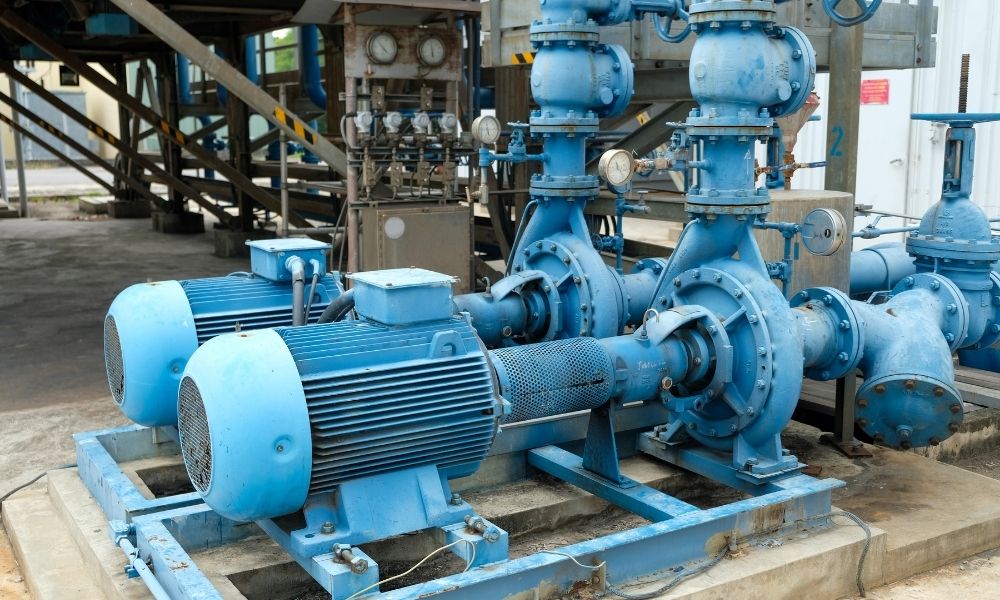
Match pump types like centrifugal, screw, Ro booster pump to liquid properties and head needs, optimizing performance. Centrifugal handles high-flow liquids, while screw pumps convey gas-laden and solids-laden fluids.
For example:
- Magnetic pumps utilize magnetic drive for efficiency over 90% and virtually no wear, cutting maintenance costs.
- Screw pumps achieve 50-80% efficiency, especially twin-screw models. Minimized fluid friction from optimized screw design saves energy.
- Centrifugal pumps with optimized impeller dynamics reach over 90% efficiency. Reduced backflows and vortices from improved volutes save power.
- Piston diaphragm pumps transfer via diaphragm motion directly, avoiding valve switching losses, with 95% efficiency. Simple sealing reduces maintenance.
- Turbine pumps attain 80-90% efficiency. Precision turbine blade improvements dramatically increase efficiency.
- Variable-speed pumps adjust rpm with VFDs, providing just needed power and significantly lowering energy consumption.
Considering efficiency, reliability, and maintenance, these types represent energy-saving options.
6.Optimal Pump Positioning

Proximity to liquid source improves suction power, while distance reduces it. Position height affecting head directly influences power needs.
Ideally, boosters stay below tanks and near inlets to maximize suction.
- Screw pumps offer strong suction even at distance, and stable pressure boosting - ideal boosters.
- Self-priming pumps create vacuum for self-priming even without submersion. Centrifugal and turbine types work best.
- Piston pumps have weaker priming than screws but generate 40-60 bar boosting pressures, excellent for boosting. Closer to source is better.
- Centrifugal pumps need auxiliary suction as self-priming is weak. But can achieve 20-30 bar boosting pressure, also solid boosters.
- Turbine pumps work similarly to centrifugal but with slightly stronger 30-40 bar boosting. Also require suction aids.
Proper pump type selection requires considering liquid properties, head needs, environment, acquisition and operation costs. This guide provides key factors to choose the optimal pump from extensive options.